Undergraduate Education
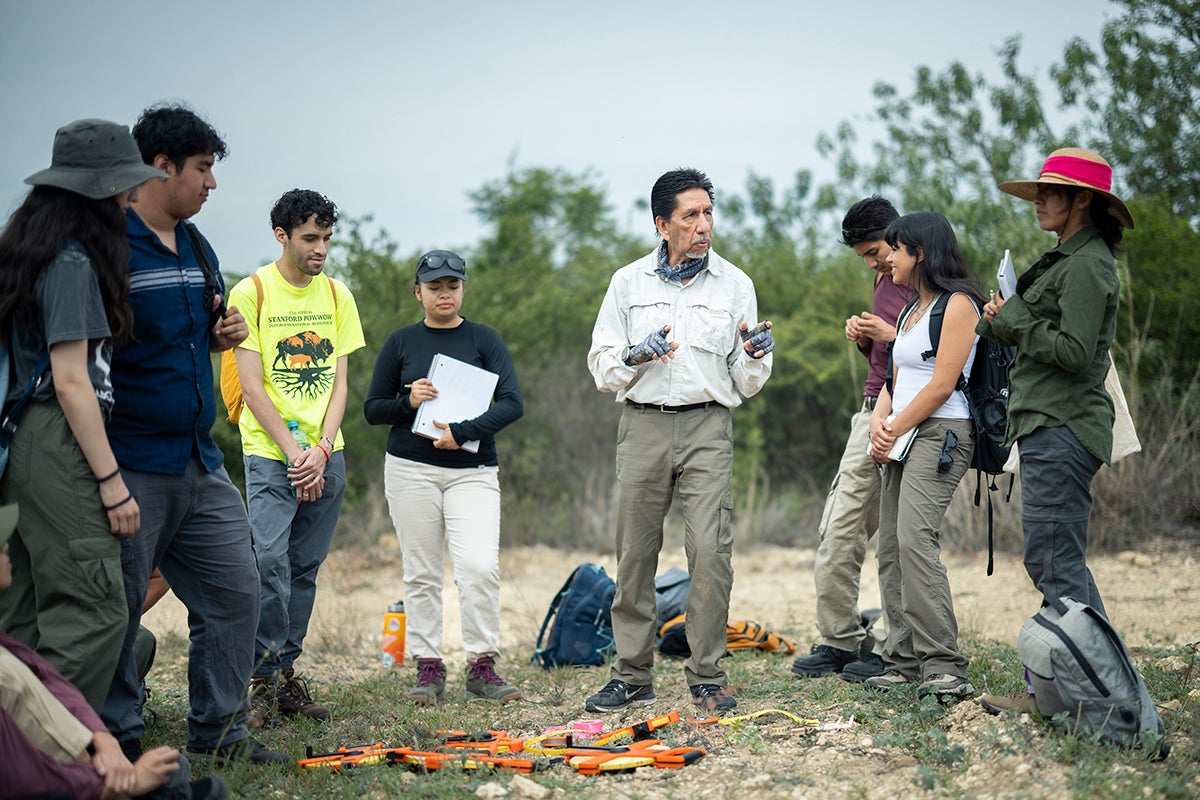
Students who enjoy learning and challenging themselves thrive at Stanford. We seek students who have selected a rigorous academic program and achieved distinction in a range of areas.
With an approximate 6-to-1 student-to-faculty ratio, Stanford emphasizes close student and faculty interaction. Stanford offers three undergraduate degrees: Bachelor of Arts, Bachelor of Sciences and Bachelor of Arts and Sciences. Each is designed to achieve balance between depth of knowledge acquired through specialization and breadth of knowledge gained through exploration.
Three of Stanford’s seven schools award undergraduate degrees: Humanities and Sciences; Engineering; and the Stanford Doerr School of Sustainability. Undergraduates complete at least 180 units, including major courses, writing and rhetoric requirements, and one year of a foreign language. All undergraduates also complete their Ways of Thinking / Ways of Doing general education requirements: 11 courses in 8 interdisciplinary Ways categories.
Undergraduates also experience COLLEGE, a three-quarter required set of courses for first-year students incorporating civic, liberal, and global education.
Stanford’s distinctive undergraduate programs include:
Introductory Seminars: These small seminar classes for first- and second-year students enroll more than 2,000 students annually. Faculty from all seven schools of the university teach over 200 seminars each year.
Bing Overseas Studies Program: Stanford offers study away opportunities in Australia, Berlin, Cape Town, Florence, Hong Kong, Istanbul, Kyoto, Madrid, New York, Oxford, Paris and Santiago. Also offered are short-term faculty-led programs in Oaxaca and various locations. Each year, approximately 900 students—50 percent of the average class year—study away on Stanford programs.
Undergraduate Research: The Office of the Vice Provost for Undergraduate Education annually dedicates more than $6.5 million to support nearly 1,000 students participating in a wide range of virtual and on-campus projects and programs. Approximately one third of all students use VPUE undergraduate research funding at some point in their time at Stanford.
Project funding has been used by students and faculty in departments and programs across every school, as well as nearly 20 interdisciplinary institutes and research centers. Projects regularly span the humanities, arts, social sciences, natural sciences, engineering and medical sciences.
Undergraduate Fields of Study
Stanford offers 66 major fields of undergraduate study. Engineering students may also elect to pursue an individually designed major.
Undergraduate Financial Aid
Stanford has a long-standing commitment to providing an affordable education to all students, regardless of their economic circumstances. Eighty-seven percent of the recent graduating class had no student debt. Through our generous need-based financial aid program, parents with annual incomes below $150,000 and assets typical for that income level pay no tuition. Parents with income at or less than $100,000 and typical assets pay no tuition or room and board. Families with higher incomes and assets also qualify for assistance depending on their individual circumstances. Learn more about financial aid for undergraduate students.