Research and Innovation
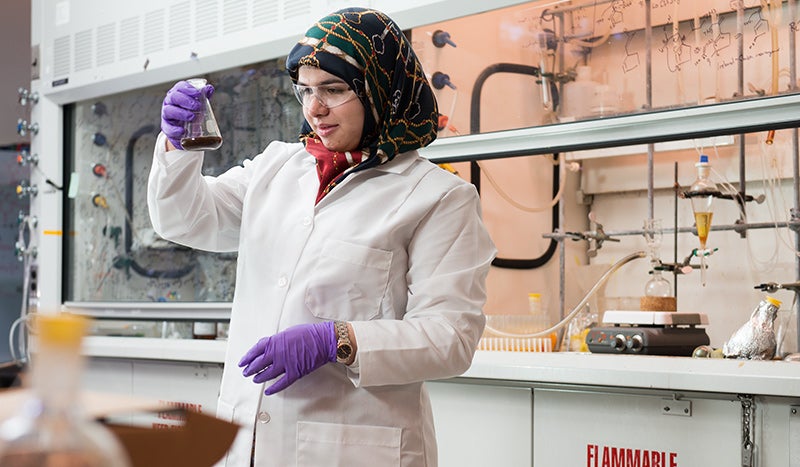
Stanford research is remarkable in both its breadth and depth, with research programs that reflect the expertise, creativity and initiative of the faculty who set the research agenda. Faculty have a long tradition of engaging with their colleagues and students within Stanford’s schools and working across disciplines.
Sponsored Research
There are more than 7,500 externally funded sponsored projects throughout the university, with the total sponsored support revenue of $2.2 billion during the fiscal year ending August 31, 2024, including the SLAC National Accelerator Laboratory (SLAC) and public assistance grant awards from the Federal Emergency Management Agency (FEMA). The federal government sponsors over three-quarters of these projects, including SLAC and FEMA awards.
Independent Laboratories, Centers and Institutes
There are 15 independent laboratories, centers and institutes under the Office of Vice Provost and Dean of Research that provide physical and intellectual intersections between schools and disciplines. These institutes are in line with Stanford’s long-standing tradition of crossing boundaries to tackle large problems, engaging faculty and their students in collaborations that range from international and economic studies to studies on the environment, energy and health. Visit the interdisciplinary programs website for more information.
Humanities and Social Science Centers
- Center for Advanced Study in the Behavioral Sciences (CASBS)
- Stanford Center on Longevity (SCL)
Policy Institutes
- Freeman Spogli Institute for International Studies (FSI)
- Stanford Human-Centered Artificial Intelligence (HAI)
- Stanford Institute for Economic Policy Research (SIEPR)
Science, Technology, Engineering and Math (STEM) Laboratories and Institutes
- E. L. Ginzton Laboratory
- Geballe Laboratory for Advanced Materials (GLAM)
- Kavli Institute for Particle Astrophysics and Cosmology (KIPAC)
- Sarafan Chemistry, Engineering, and Medicine for Human Health (ChEM-H)
- Stanford Bio-X
- Stanford Institute for Materials and Energy Sciences (SIMES)
- The Stanford PULSE Institute
- Wu Tsai Human Performance Alliance
- Wu Tsai Neurosciences Institute
- W. W. Hansen Experimental Physics Laboratory (HEPL)
Other Special Research Centers
SLAC National Accelerator Laboratory
SLAC National Accelerator Laboratory is a U.S. Department of Energy national laboratory operated by Stanford. The lab shares 17 joint faculty members with the university and several joint research centers that focus on cosmology and astrophysics, materials and energy science, catalysis, batteries, ultrafast science and cryogenic electron microscopy. SLAC’s mission is to explore how the universe works at the biggest, smallest and fastest scales and invent powerful tools used by researchers around the globe. As world leaders in ultrafast science and bold explorers of the physics of the universe, the lab forges new ground in understanding our origins and building a healthier and more sustainable future. SLAC’s discovery and innovation help develop new materials and chemical processes and open unprecedented views of the cosmos and life’s most delicate machinery. Building on more than 60 years of visionary research, SLAC helps shape the future by advancing areas such as quantum technology, scientific computing and the development of next-generation accelerators.
Hoover Institution
Established in 1919 by Herbert Hoover—a member of Stanford’s Pioneer Class of 1895 and the 31st U.S. president. Former Stanford Provost and U.S. Secretary of State Condoleezza Rice assumed the role of director on September 1, 2020. From its initial charge to collect materials documenting the experience of war and the pursuit of peace, the institution stands today as the world’s preeminent archive and policy research center dedicated to freedom, private enterprise and effective, limited government. Visit the Hoover Institution website to learn more.
Jasper Ridge Biological Preserve
Jasper Ridge Biological Preserve (‘Ootchamin ‘Ooyakma), located in the Santa Cruz foothills about 15 minutes from the main Stanford campus, encompasses 1,193 acres and provides a natural laboratory for ecosystem research and teaching. Docent-led tours are offered to groups aligned with the preserve’s mission to contribute to the understanding of the Earth’s natural systems through research, education, and protection of the preserve’s resources.
Call: 650-851-6813
Hopkins Marine Station
Hopkins Marine Station opened in 1892 as the first marine research facility on the Pacific Coast and the second in the United States. Located on Monterey Bay, Hopkins is home to marine research and study by 12 faculty, one lecturer, three emeritus faculty, and one emeritus lecturer.